

Here a graphical analysis is presented that address a pure test of Biblically Responsible Investing (BRI). Inspire Investing, LLC offered Inspire 500 ETF (ticker: PTL) in March 2024 with an expense ratio of 0.09% or 9 basis points. Over time, the investment performance consequences of BRI public funds will be examined. (See my quarterly BRIQ Newsletter and my weekly Substack publication, both freely available.)
Evaluating BRI-based funds to date unfortunately involves the joint hypothesis:
· Hypothesis 1: Corporate leadership enhance shareholder wealth when they embrace (or even lean in the direction of) a biblically-based business worldview.
· Hypothesis 2: Fund managers enhance shareholder wealth when they pursue active fund management.
It is possible that BRI-based funds significantly overperform their benchmarks due to Hypothesis 1 being true. These gains, however, might be totally lost (and even more) because Hypothesis 2 is significantly false. Imagine for a moment: BRI-based companies significantly outperform their peers in returns to shareholders, but BRI fund investors never get to participate in this outperformance due to wealth destruction based on active management!
There are obviously at least four outcomes—each hypothesis can be either true or false. My reading of the Bible, however, leads me to conclude that Hypothesis 1 is generally true whereas Hypothesis 2 is generally false. Empirically, the academic finance community has known for decades that Hypothesis 2 is resoundingly false. It is a mystery why most BRI fund managers are still acting as if Hypothesis 2 is true. The ability to justify high fees and the simple thrill of placing bets with others’ money may lie at the heart of the matter.
PTL is a pure test of whether Hypothesis 1 is true and Hypothesis 2 is false. Obviously, there are other possible conclusions, such as PTL’s screens fail to appropriately filter companies. Exploring these alternate issues will have to wait.
PTL — The Inspire 500 ETF: A Faith-Filtered Core Holding
PTL appears almost like the S&P 500® reborn through a biblical lens. Launched in March 2024, it was designed to give Christian investors what they had long lacked: a broad, low-cost index ETF free from companies that violate biblically-based principles.
Behind the scenes, PTL tracks the Inspire 500 Index, a rules-based collection of large-cap U.S. companies selected first based on market capitalization, then screened for “Biblically Aligned Business Activities.” Firms are evaluated through Inspire’s Impact Score, which filters out involvement in abortion, pornography, human-rights violations, or other industries deemed inconsistent with Christian ethics.
Cost control is central to its appeal. With an expense ratio of just 0.09%, PTL undercuts even many secular funds. The approach is intentionally passive—theology supplies the filter; markets supply the pricing.
What emerges is a market-tracking portfolio shaped by the Bible, seeking to mirror the risk-return profile of mainstream large-cap equities while testifying that moral alignment need not require sacrificing diversification or efficiency.
Fund Summary Information
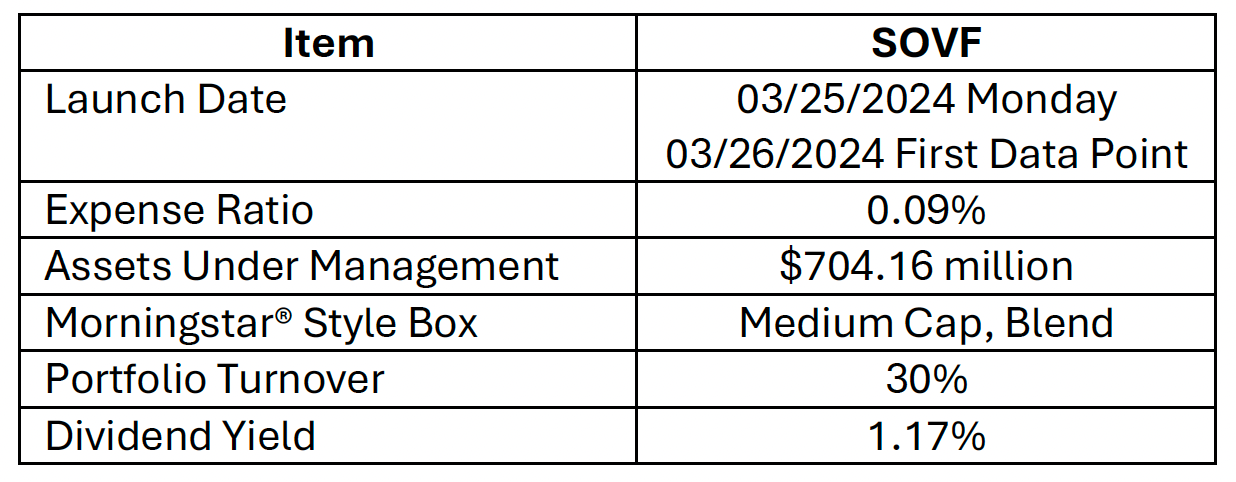
The following table provides summary information as reported on yahoo!finance accessed on April 6, 2026.
PTL’s Performance Compared with Selected Benchmarks
The performance analysis is constrained from 03/25/2024 through 03/25/2026 (two year analysis). Graphical analysis is presented for three benchmarks: 1) VTI (broad US exposure), 2) SPY (popular large cap exposure), and 3) VIMAX (medium cap, blend exposure).
Much of the investment industry requires a three year track record before any significant inferences can be made. Unfortunately, given the social science nature of investment management, it is difficult to acquire certitude no matter how much history is available.
PTL Compared with VTI (Broad US Exposure)
The initial performance benchmark tracks the total stock market, VTI. Suppose an investor is choosing between PTL and VTI. How does PTL perform over this brief period?
The Vanguard Total Stock Market ETF (VTI) is one of the most comprehensive and widely used investment vehicles for broad U.S. equity exposure. Managed by The Vanguard Group, VTI seeks to track the performance of the CRSP U.S. Total Market Index, which encompasses virtually the entire investable U.S. stock market. VTI provides instant diversification across more than 3,000 companies. It is market-capitalization weighted, meaning that larger firms like NVIDIA, Apple or Microsoft have proportionally greater influence on returns. The ETF format offers high liquidity, tax efficiency, and ultra-low expenses (currently just a few basis points).
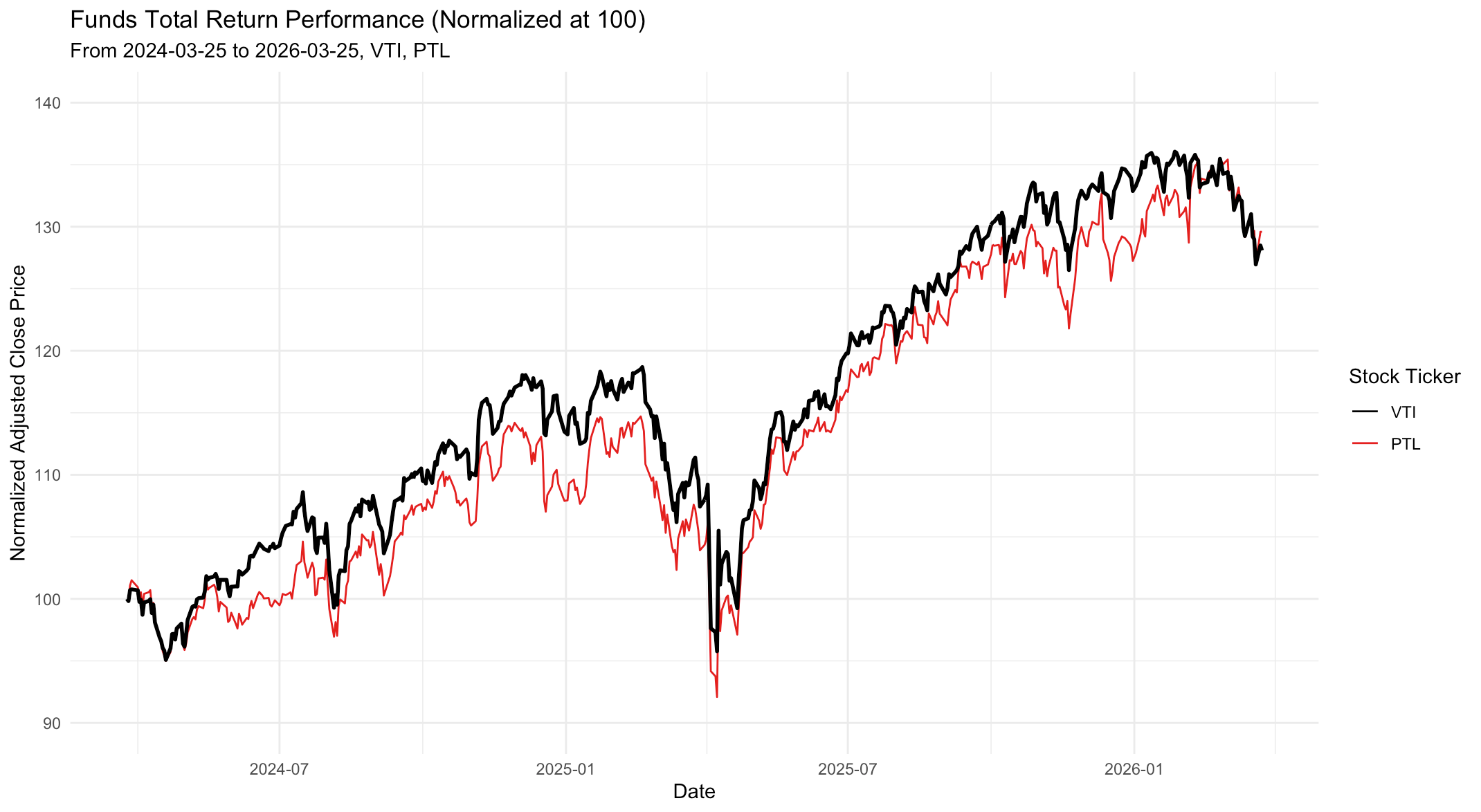
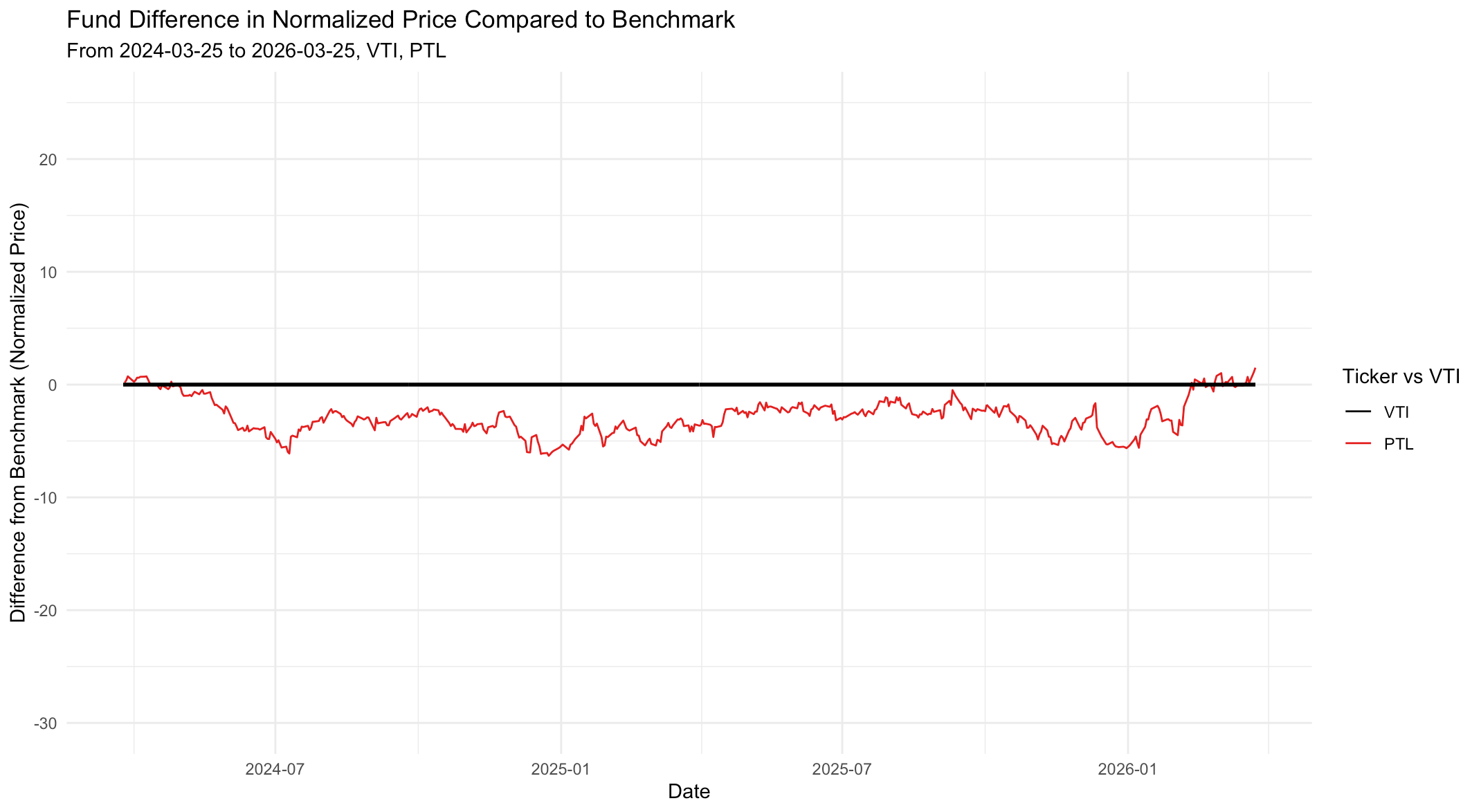
Figure 1 presents the total return on the comparator fund, VTI, with PTL. Panel A illustrates total return on $100, and Panel B illustrates the dollar value in excess of VTI. Two observations are made. First, Panel A illustrates that PTL does appear to closely track VTI. Because both PTL and VTI are market capitalization weighted, the larger the market cap, the larger the allocation. Even though PTL is within the medium cap blend category and VTI is within the large cap blend category, VTI is not substantively different from PTL. Second, Panel B documents that PTL performs about the same as VTI. Thus, BRI-based investing did not prove either costly or beneficial regarding performance when compared to VTI.
Figure 1. Performance of PTL Compared With VTI
Panel A. Total Return on $100
Panel B. Dollar Excess Return per $100
PTL Compared with SPY (Popular Large Cap Exposure)
Now suppose an investor is choosing between PTL and SPY. How does PTL perform over this brief period?
SPDR S&P 500 ETF Trust (SPY) is one of the largest and most widely traded exchange-traded funds (ETFs) in the world, designed to track the performance of the S&P 500 Index. Launched in 1993 by State Street Global Advisors, it provides investors with low-cost, highly liquid exposure to approximately 500 of the largest publicly traded U.S. companies across all major sectors of the economy. SPY is often used as a benchmark for U.S. equity performance.
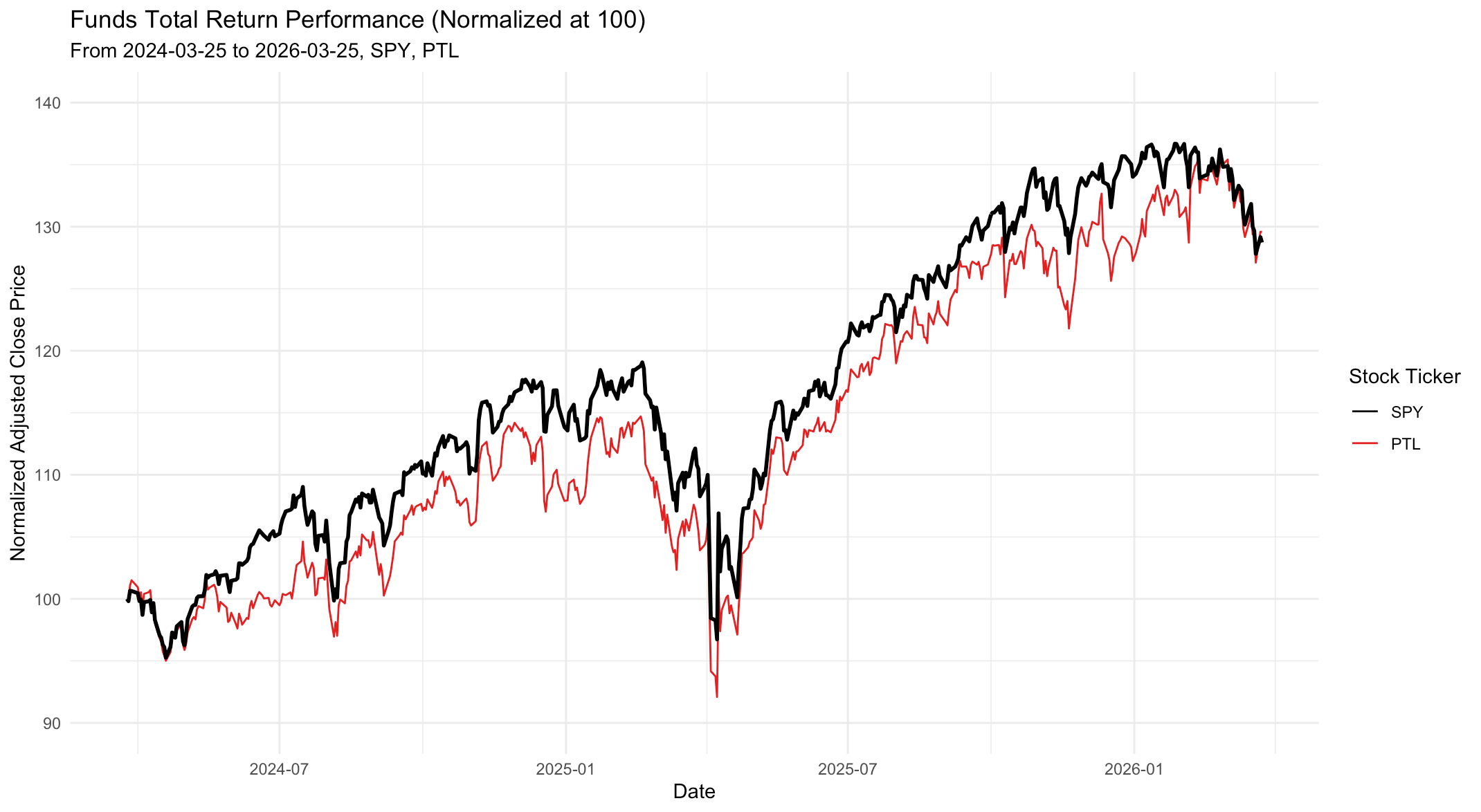
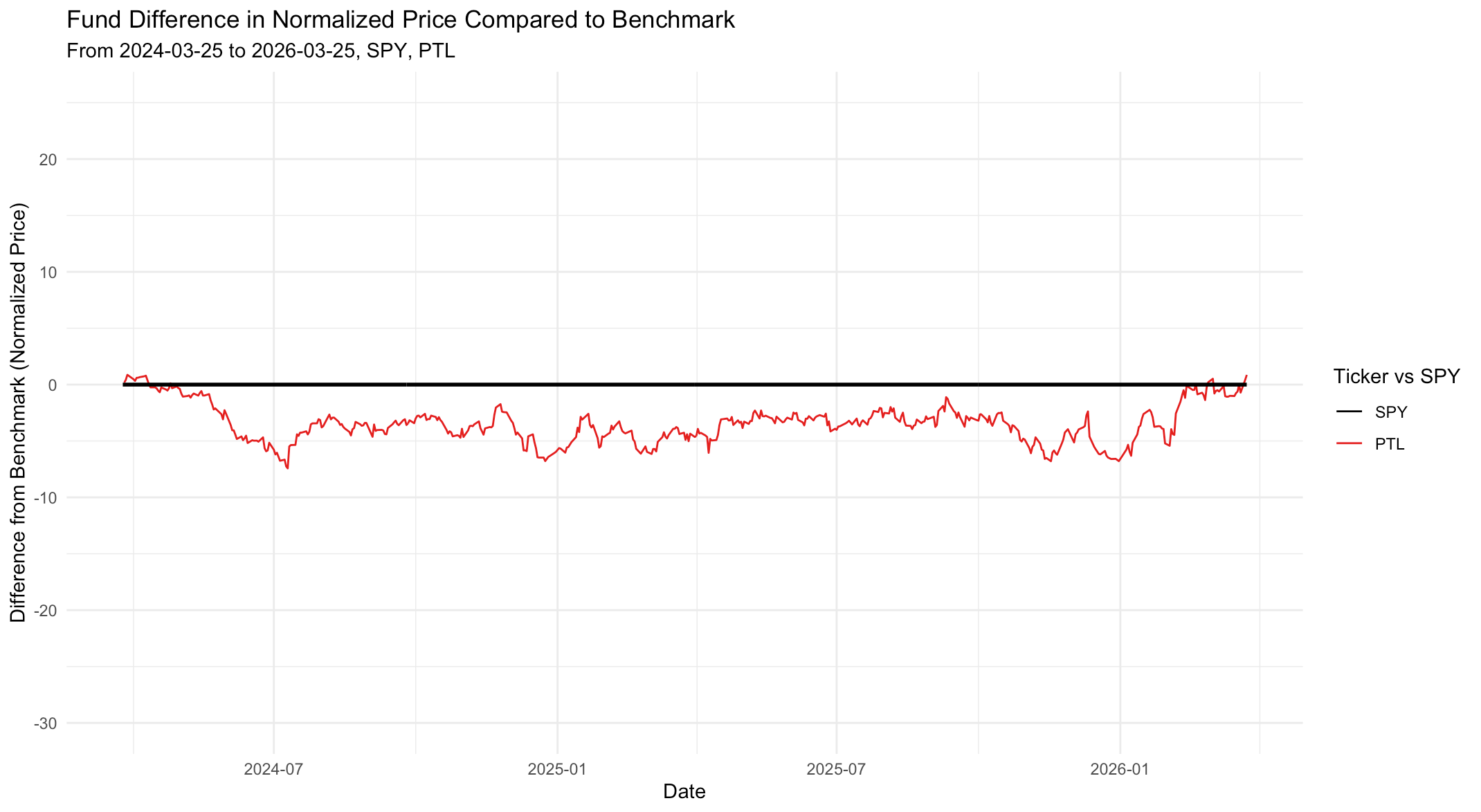
Figure 2 presents the total return on the comparator fund, SPY, with PTL. The results here are very similar to VTI.
Figure 2. Performance of PTL Compared With SPY
Panel A. Total Return on $100
Panel B. Dollar Excess Return per $100
PTL Compared with VIMAX (Medium Cap, Blend Exposure)
Finally suppose an investor is choosing between PTL and VIMAX. VIMAX is the appropriate benchmark in practice as this fund is selected based on an independent assessment of PTL’s actual holdings. It is important that the benchmark is not based on the fund manager’s assertions, rather an independent analysis.
Vanguard Mid-Cap Index Fund Admiral Shares (VIMAX) is a low-cost mutual fund offered by Vanguard that seeks to track the performance of the CRSP US Mid Cap Index, providing diversified exposure to U.S. mid-sized companies positioned between large-cap stability and small-cap growth potential. With a very low expense ratio and broad sector representation, VIMAX is commonly used as a core portfolio holding for investors seeking efficient, passive exposure to the mid-cap segment of the U.S. equity market, often complementing large-cap index funds like the S&P 500 Index in a well-diversified investment strategy.
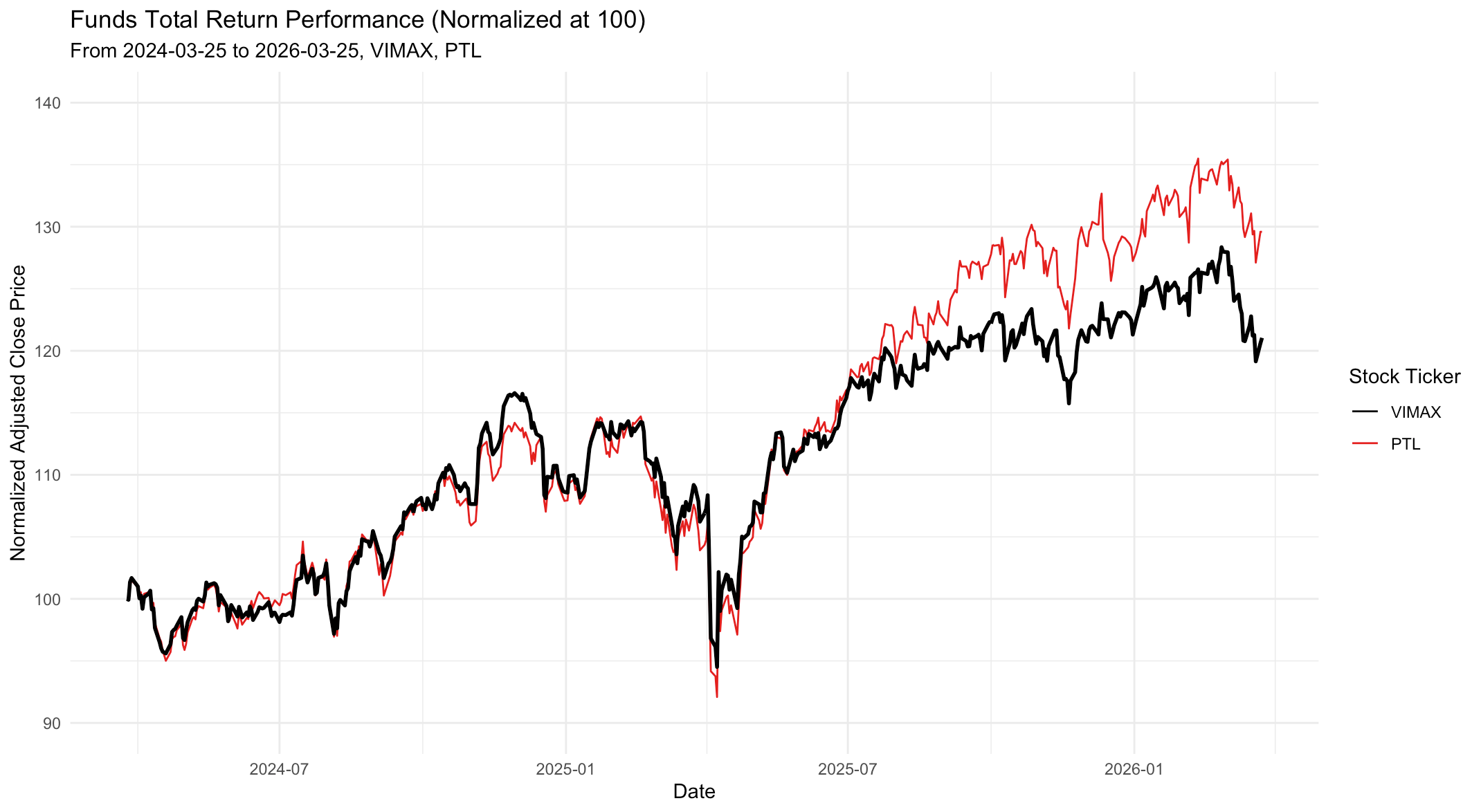
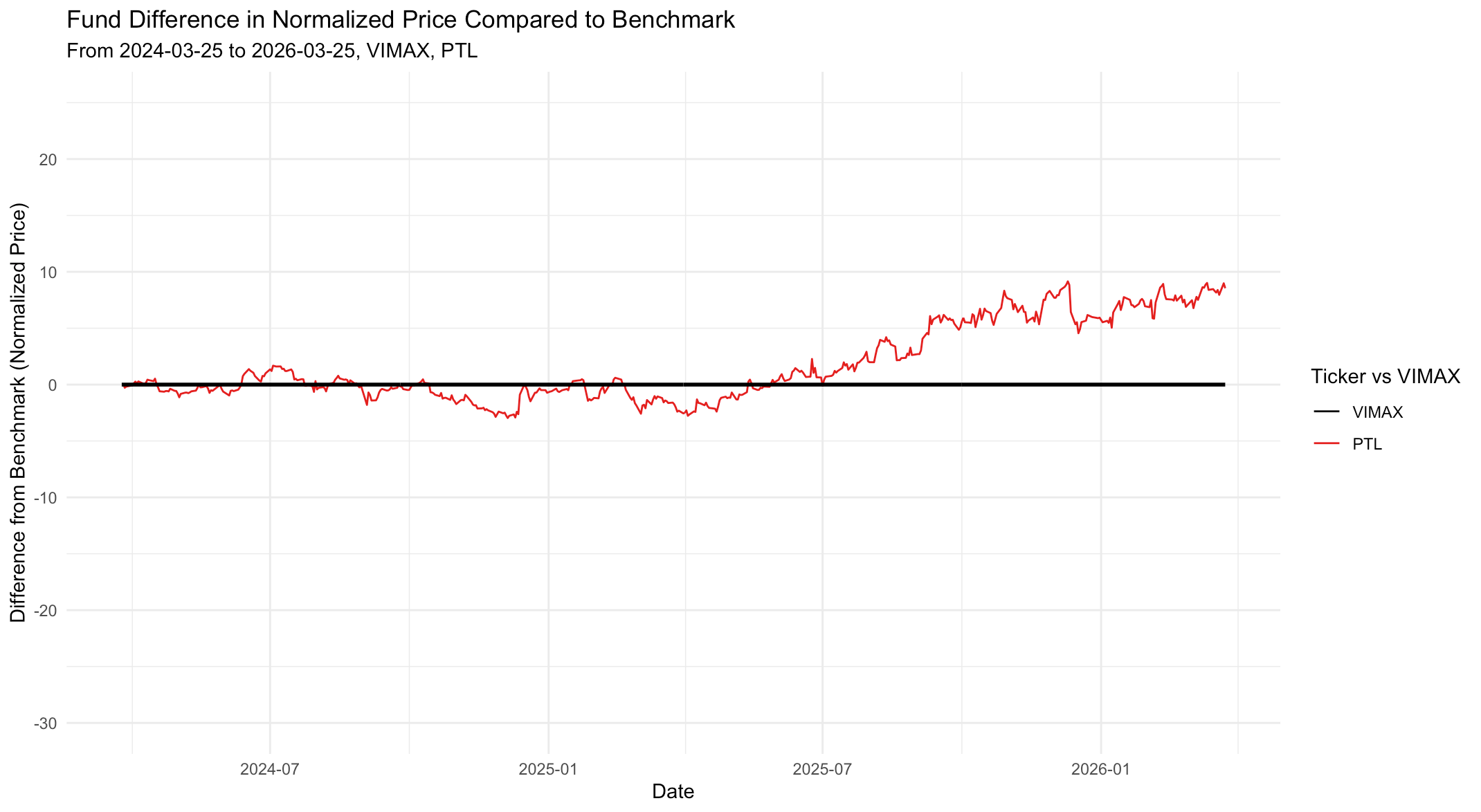
Figure 3 presents the total return on the comparator fund, VIMAX, with PTL. Again, Panel A illustrates total return on $100, and Panel B illustrates the dollar value in excess of VIMAX. Panel A illustrates that PTL does appear to outperform VIMAX. Panel B documents clearly that PTL performs better than VIMAX. Thus, BRI-based investing did provide about a 10 percent point benefit over this two year period (not annualized) regarding performance when compared to VIMAX.
Figure 3. Performance of PTL Compared With VIMAX
Panel A. Total Return on $100
Panel B. Dollar Excess Return per $100
PTL Summary
The key emphasis is that it is likely too early to draw any substantive inferences as we are only a couple of years into PTL’s track record. It remains an open question as to whether public market corporate leaders who pivot to operate within biblical principles subsequently generate additional substantive returns to its shareholders. It will take many more years to begin to answer this question but these initial results for PTL are promising.